Back protectors and airbag vests, decodedEdition for riders in the United States
Prices quoted in this guide are in Canadian dollars (CA$), as written for the original edition. Follow the links to see live USD prices delivered to the United States.
Back protector vs airbag vest, for motorcycles and for mountain biking. Mountain bikers wear soft EN 1621-2 back protectors and protector vests; motorcycle airbag vests are built for road speeds. The guide explains EN 1621-2 Level 1 vs Level 2 and EN 1621-4, shows what back protectors and airbag vests cost by region from ALLR data, and covers the foam dummy in most motorcycle jackets, the four airbag systems we track (Tech-Air, Dainese D-Air, In&Motion Klim Ai-1, Helite) and the subscription myth.
Buy buttons with a small green dot are affiliate links: if you buy through one, we may earn a small commission. It never changes the price you pay. How ALLR makes money

The biggest gap in most beginner motorcycle kits isn't the helmet, the boots, or the gloves — it's the back protector that came with the jacket but isn't actually a back protector. The pocket in your jacket between the shoulder blades is there for one, but in many jackets, at every price tier, the manufacturer ships a soft foam dummy instead of a CE-rated armor insert. The dummy adds zero protection. Adding a real one is the single highest-return safety upgrade after you've assembled the base kit, and we'll show you exactly which one to buy. Then there's the next-tier question every rider eventually asks: passive back protector at CA$84.95 to CA$239.99, or an airbag vest at CA$429.95 (the Klim Ai-1 vest, before its In&Box module) to CA$1,436.95 (the Tech-Air 10 V2 Race)? Prices here are the lowest landed prices in Canada on 2026-11-10, with a US view alongside. We've researched both categories deeply — including the persistent myth that airbag systems require monthly subscriptions (most don't) — and we'll lay out where each fits in a budget. If you ride a mountain bike rather than a motorcycle, jump to back protector vs airbag vest for mountain biking.
Back protector vs airbag vest for mountain biking
Short answer: for mountain biking the realistic choice is a back protector or protector vest, not a motorcycle airbag vest. The bike-protection brands (Leatt, POC, EVS, Troy Lee Designs) sell soft back protectors, protector vests and pack inserts, and the models we checked carry an EN 1621 rating (EN 1621-2 is the back-protector part), the same family of standards motorcycle back protectors are tested to. Motorcycle airbag vests are built and tuned for motorcycle speeds and crashes, and none of the maker pages we read sells one for mountain biking. Two caveats: ALLR compares motorcycle gear, so our catalog holds only a handful of MTB-suitable protectors, and a certificate is a lab result, not a promise about any one crash.
Back protector vs airbag vest at a glance
Same body, different job. Standards and maker statements are cited at the end of this guide; prices are ALLR landed prices checked 2026-11-10.
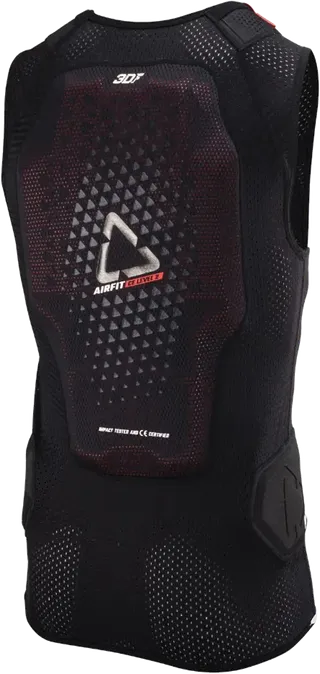
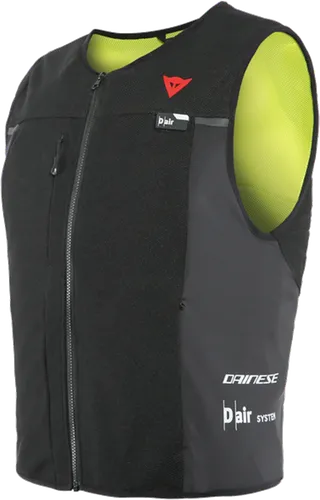
Typical landed prices from ALLR's catalog on 2026-11-11; the US, Europe and the UK (both with import VAT) are in the price comparison.
| Type | What it is | Examples and what the maker states |
|---|---|---|
| Back protector vest | Soft protector in a vest or harness that moves with the body | Leatt Back Protector Vest 3DF AirFit Evo: "Premium Level 2 back protection (EN1621-2) with added chest coverage" (Leatt). POC Spine VPD 2.0 Vest: "meets the EN 1621-2 Level 1 protection standard", sold as MTB protection (POC); not in the ALLR catalog. |
| Chest and back protector | Front plate plus a removable back insert | EVS F1 Pro Chest Protector: back protection "CE EN 1621-2 Level 1", listed for "moto, eMTB, MTB, pit bike riding" (EVS). Troy Lee Designs Rockfight CE: removable back insert that "exceeds CE EN1621 Level 1" (Troy Lee Designs). |
| Pack insert | Back protector that slots into a hydration pack | Leatt's insert for "1.5 hydration Moto and MTB systems" is stated as "CE-certified Level 2"; the page does not name the standard (Leatt). |
| Motorcycle airbag vest | Gas-inflated vest fired by crash sensors or a tether to the bike | No MTB claim on the maker pages we read. Alpinestars frames every Tech-Air model around motorcycle riding (Alpinestars); Dainese's D-air has Road, Offroad and EV modes, all described for motorcycles and scooters (Dainese); Helite's bicycle vest is "adapted for urban cyclists" and "not adapted for mountain bike" (Helite FAQ). |
The two standards in plain words.
- EN 1621-2 (back protectors). Its title is "Motorcyclists' protective clothing against mechanical impact, Part 2: Motorcyclists' back protectors" (iTeh). A 5 kg flat impactor strikes the protector at 4.47 m/s (50 J). Level 1 needs a mean transmitted force below 18 kN with no single value over 24 kN (SATRA); Level 2 halves the mean to 9 kN (full table). The MTB makers above cite it, but it is a motorcycle standard: it tells you how the protector does in that lab test, not that it was designed around a bike-park crash.
- EN 1621-4 (inflatable protectors). CEN published EN 1621-4:2013 on 16 January 2013; its scope is "mechanically activated inflatable protectors for motorcycle riders" (Standards Ireland catalogue). It defines two levels and checks inflation with a camera recording at least 200 frames per second (SATRA). Electronic vests such as Tech-Air and D-air are outside that wording, so their makers certify them another way: Dainese's Smart Air page lists PPE (2016/425) and a "Level 2-certified" airbag (Dainese). Compare the maker's certificate, not just the label.
Can you wear a motorcycle airbag vest mountain biking? We would not buy one for that on the strength of the motorcycle specifications. Dainese says its D-air vest arms above 10 km/h in Road mode and above 20 km/h in Offroad mode, and describes the falls it detects in motorcycle terms (highsider, lowsider) (Dainese). Alpinestars frames Tech-Air around motorcycle riding (Alpinestars). Helite does sell a bicycle vest, and says it is for urban cyclists and not adapted for mountain bike (Helite FAQ). We found no maker page that sells a motorcycle airbag vest for mountain biking. If you want an airbag on a bike, ask the maker in writing whether the vest supports cycling and which speeds and crash types it was tuned for.
Wearable mountain bike protectors from our catalog are further down, in the mountain bike product block. The rest of this guide is the motorcycle case, where passive back protector vs airbag vest is a budget decision with real trade-offs: what the foam dummy in your jacket does, what EN 1621-2 Level 1 and 2 mean, which four airbag systems exist, and what each costs.
The foam-dummy trap
Walk into any motorcycle retailer, buy a CE-armored riding jacket, and check the pocket in the lining between your shoulder blades. The shape is correct — long, vaguely spine-shaped, fitted to the pocket — but the material is not. The dummy is closed-cell foam at 1–2 cm thick, sometimes covered in a textile mesh sock. It exists for two reasons: to keep the pocket open during shipping and store display so the jacket hangs properly, and to give the rider something while they buy the actual protector separately. The dummy is not CE-rated. It does not meet EN 1621-2 at any level. In a slide-and-impact crash it will compress to nothing within milliseconds and transmit close to the full impact force to the vertebrae underneath.
Every major brand does this — Alpinestars, Dainese, REV'IT, Klim, Spidi, Held. The 2026 Alpinestars Andes V4 Drystar jacket (recommended in our beginner kit guide) ships with a foam dummy. The Klim Latitude does too. The REV'IT Eclipse 2 does too. This is industry-standard practice, not a brand failure, but it does mean a buyer who hasn't been told about it rides for years assuming they have a back protector when they don't. The fix is a CE-rated insert, CA$84.95 to CA$239.99 on 2026-11-10 (see the comparison table below), slotted into the same pocket. Five-minute upgrade, single biggest risk delta in the kit.
EN 1621-2 — what Level 1 vs Level 2 actually mean
EN 1621-2 is the European harmonized standard for motorcycle back protectors (limb armor falls under EN 1621-1; chest protectors under EN 1621-3). It defines a force-transmission test methodology and two pass thresholds. The test rig is mechanically simple and consistent across labs: a 5 kg flat steel impactor is dropped from 1.0 m onto the armor (4.47 m/s impact velocity, 50 J energy), with a load cell underneath measuring the peak force transmitted through the protector to a hemispherical anvil. See SATRA's EN 1621 technical page for the official test procedure and EN 1621-2:2014 at iTeh Standards for the full text.
| Spec | Level 1 | Level 2 |
|---|---|---|
| Mean transmitted force (average across multiple strikes) | ≤ 18 kN | ≤ 9 kN |
| Maximum any single strike | ≤ 24 kN | ≤ 12 kN |
| Drop weight | 5 kg flat impactor | 5 kg flat impactor |
| Drop velocity | 4.47 m/s | 4.47 m/s |
| Impact energy | 50 J | 50 J |
| Wet-impact test | Mandatory | Mandatory |
| Temperature test | Optional (claim −10 / +40 °C) | Optional (claim −10 / +40 °C) |
Translation: Level 2 transmits half as much force, on average, as Level 1 — a meaningful real-world difference. For street riding, Level 1 is the baseline minimum every rider should carry; for track days, racing, and any spirited road riding, Level 2 is the sensible default. At Alpinestars the Level 2 Nucleon Plasma (CA$99.95) costs CA$15.00 more than the Level 1 Nucleon KR-Cell (CA$84.95) on 2026-11-10. There's no protective reason to ever buy Level 1 if Level 2 in your size is available — Level 1 exists for tighter fit and lighter weight, not for protection. See Stealth Armor's CE Level 1 vs 2 explainer (2026) for the comparison written for consumers, and Wikipedia's Motorcycle armor entry for the test-rig diagram.
Two limits of the EN 1621-2 framework worth flagging. First, the test measures one type of impact — flat impactor at one energy. Real motorcycle crashes involve sliding plus tumbling plus secondary impacts at varying energies and angles; the standard is a useful comparative benchmark, not a complete safety guarantee. Second, EN 1621-2 only tests the protector's ability to dissipate force; it does not measure how well the protector stays positioned during a slide or how it interacts with adjacent gear. A Level 2 protector that rides up your back during a tumble protects nothing. Fit matters as much as the certification level.
Back protector vests and strap-on harnesses we track
Most riders shop for something they can put on, not a foam insert to fit into a jacket. These four are wearable, need no jacket pocket and fit under any jacket. How we chose: wearable back protectors only (no inserts), ranked by how many stores have them in stock in Canada on 2026-11-10 (these four are at 7 to 9 stores each), CE Level 2 preferred, and a spread from budget to premium so you can see what each step costs. The Alpinestars vest is Level 1 in ALLR's data, which is why its tag says so. The Leatt, Fox and Troy Lee Designs body protectors made for mountain biking are in the mountain bike product block below.
Wearable back protectors, best-stocked first
Lowest in-stock landed price for your region, with the number of stores that have it in stock. Prices checked 2026-11-10.
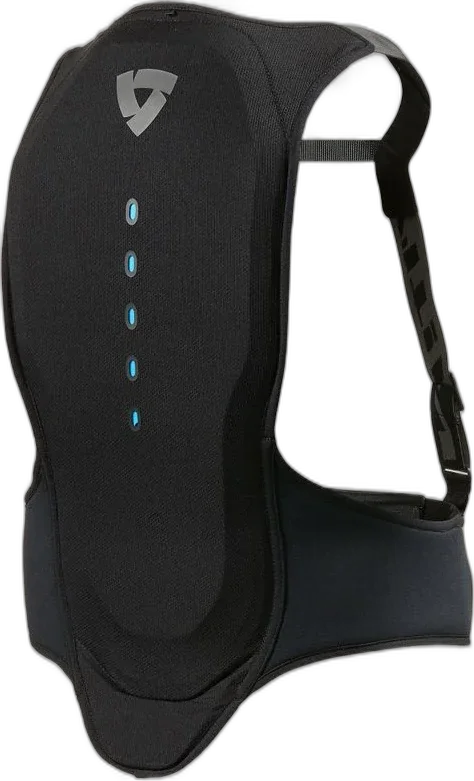
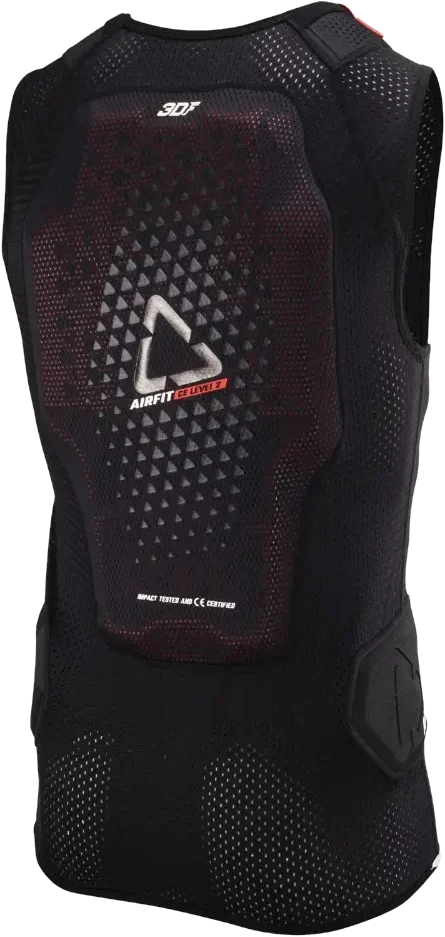
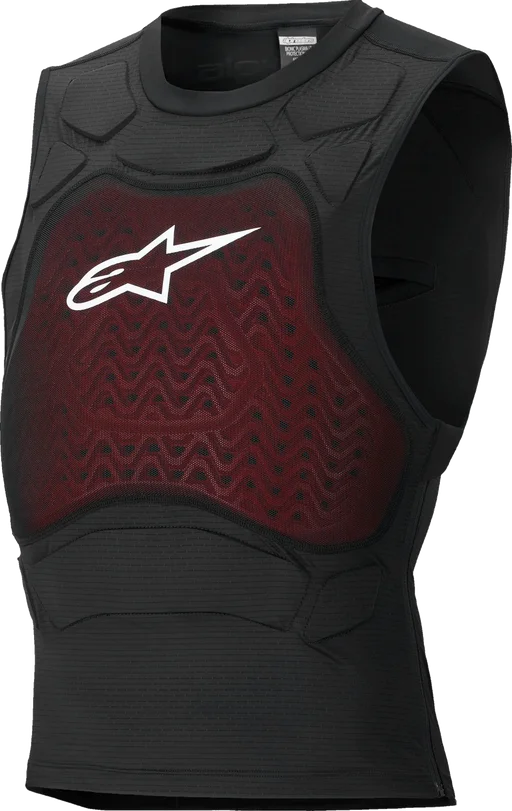
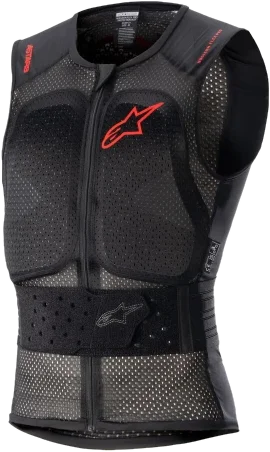
Landed price includes shipping, duty and brokerage; see how landed cost works. Browse all protection gear.
Passive back protectors — what to buy
Seven passive back protectors we track closely. All are CE Level 2 except the Nucleon KR-Cell and the Klim D3O Viper Stealth, which ALLR's retailer listings show as Level 1; all slot into a standard jacket back-protector pocket (the universal trapezoid shape) except the Forcefield Pro Lite K, which is shaped specifically for Alpinestars race jackets. Prices checked 2026-11-10, lowest landed price in Canada, with the US view alongside. The May version of this table listed the Nucleon KR-Cell twice (once with a US$219.95 price that no longer matches any listing) and called it Level 2; the retailer listings say Level 1, so it appears once below:
| Protector | Material | Cert level | Lowest landed, Canada | US view |
|---|---|---|---|---|
| Alpinestars Nucleon Plasma | Multi-layer foam | Level 2 | CA$99.95 | US$74.84 |
| Alpinestars Nucleon KR-Cell | PU honeycomb (insert) | Level 1 (per retailer listings) | CA$84.95 | US$74.36 |
| Forcefield Pro Lite K (Alpinestars-shaped) | Nitrex Evo (memory foam) | Level 2 (maker claim; not in ALLR cert data) | CA$89.00 | Out of stock for the US view |
| Forcefield Freelite L2 | Nitrex Evo (full back) | Level 2 | CA$201.07 | US$112.45 |
| Klim D3O Viper Stealth (Level 1) | D3O Airwave | Level 1 | CA$47.90 (2 of 7 listings in stock) | Out of stock (0 of 7 listings) |
| Knox Aegis | Honeycomb + outer shell | Level 2 | CA$239.99 | Out of stock for the US view |
| Spidi Warrior L2 | Multi-layer composite | Level 2 | CA$133.11 | US$70.32 |
The picks. For the recommended kit's Alpinestars Andes V4 jacket, the simplest answer is the Nucleon Plasma at CA$99.95 (US$74.84 in the US view) — designed by Alpinestars to fit Alpinestars jackets without compatibility guesswork, CE Level 2, multi-layer foam construction that stays soft during normal wear and stiffens on impact. For a jacket from another brand, the Knox Aegis (CA$239.99, CE Level 2 with sliding-spine honeycomb, made and tested in the UK at −20 °C / +40 °C) is the gold-standard third-party choice — slightly larger coverage than most stock OEM inserts. The D3O Viper Pro and Viper Stealth family use D3O's intelligent-molecule foam that's been the industry standard for soft-yet-protective since the mid-2010s; verify the level (the basic Viper Stealth is Level 1, the Viper Pro is Level 2). On 2026-11-10 the Viper Stealth was in stock at two of its seven Canadian listings (from CA$47.90) and out of stock in the US view; the Spidi Warrior L2 at CA$133.11 (US$70.32 in the US view) is an in-stock Level 2 alternative. The Nucleon KR-Cell is CA$15.00 cheaper than the Plasma at CA$84.95, but it is a Level 1 insert, so it is a different grade rather than a cheaper Level 2.
Sizing. Back protectors come in S / M / L / XL with vendor-specific charts; the dominant variable is your seated upper-body length (cervical vertebra C7 to lumbar L5). Most riders 170–185 cm tall wear Medium; 185+ cm typically Large. Width matters less than length — the protector should cover from the base of your neck to at least the top of your hips when seated. A protector that's too short to reach your lumbar region leaves the most-impacted portion of the spine exposed. See per-brand sizing guidance in Knox's Aegis product page and Alpinestars' Nucleon KR-Cell PDP for the official chart.
Chest protectors — when to add
EN 1621-3 (introduced in 2018) is the European harmonized standard for chest protectors — same test methodology as 1621-2 (5 kg @ 4.47 m/s, 50 J) but measured at the sternum rather than the spine. Chest protectors live in a separate pocket in the jacket front (when present); most jackets at every price point ship with no chest insert at all, not even a foam dummy. The category is genuinely optional for street riding at low speeds, and meaningfully important for higher-speed road, sport, and trackday riding where a chest-on-tank impact at speed becomes plausible.
Five chest products we track:
| Protector | Format | Cert | Notes | Lowest landed, Canada | US view |
|---|---|---|---|---|---|
| Forcefield Elite Chest | Insert (sternum pad) | EN 1621-3 L1 | Fits most jacket chest pockets; Nitrex Evo material | Out of stock (0 of 3 listings) | US$49.99 (1 of 3 listings in stock) |
| Alpinestars A-5 Plasma | Full chest vest | EN 1621-3 L1 | Worn under jacket; race-leather pairing | CA$340.74 | US$207.46 |
| Alpinestars Bionic Tech V3 | Full protection jacket | Multi-zone CE | Standalone armored shirt; chest + back + shoulders + elbows + back | CA$484.75 | US$309.68 |
| Alpinestars A-1 Pro | Full vest with back | EN 1621-3 L1 + 1621-2 | Combined chest + back, single-garment solution | CA$224.99 | US$155.17 |
| Alpinestars A-4 Plasma | Full chest vest | EN 1621-3 | Alternative to A-5 in different shell profile | CA$239.95 | US$174.16 |
The argument for chest protection. In a high-side crash you go over the bars at the speed you were riding, and the rider's chest often hits the tank, the bars, or the road as the body decelerates. Sternum and rib fractures are common; aortic injuries from blunt-chest trauma are rare but catastrophic. A chest protector is cheap insurance against the high-side scenario next to an airbag: the cheapest chest option in stock on 2026-11-10 was the Alpinestars A-1 Pro at CA$224.99. The argument against: in a typical low-side slide (the most common motorcycle crash), the chest doesn't typically take the primary impact, and the protector adds bulk under the jacket. Our take: Skip if you only commute at city speeds; add if you ride highways, twisty roads at pace, or do any trackday. The Forcefield Elite insert slotted into most jacket chest pockets and was the smallest commitment in May, but it is out of stock at every retailer we track in both countries as of 2026-11-10; the A-1 Pro, a combined chest and back vest, is now the lowest-priced option in stock.
Airbag systems explained
An airbag vest is a CE-rated garment containing one or more inflatable bladders, a gas inflator (compressed CO₂ or nitrogen cartridge), and either an electronic crash-detection sensor module or a mechanical tether to the bike. On crash detection, the inflator releases gas into the bladder over 20–100 milliseconds, expanding the vest into a rigid protective shell around the rider's torso — chest, shoulders, back, and (on race models) hips and collar bones. After inflation the bag holds pressure for roughly 5 seconds before slowly deflating, then needs a new cartridge to fire again.
Two detection philosophies are in market in 2026. Electronic systems (Alpinestars Tech-Air, Dainese D-Air, In&Motion / Klim Ai-1) use a combination of accelerometers, gyroscopes, and proprietary crash-detection algorithms running on an onboard ECU; the system continuously monitors the rider's motion and fires when a pattern matches a learned crash signature. Mechanical systems (Helite Turtle 2) use a physical tether (a lanyard) clipped to the bike that physically pulls a firing pin out of the CO₂ cartridge if the rider separates from the bike by more than the lanyard's stretched length. Electronic is faster (20–50 ms typical deploy) and works in any rider-separates-from-bike scenario including low-sides where the rider doesn't fully eject; mechanical is slower (80–100 ms) and requires the rider to actually separate from the bike by ~50–80 cm to trigger, but works with no battery, no firmware, and no failure modes that depend on electronics.
Why airbags add what passive back protectors don't. A CE back protector covers the spine from neck to lumbar. An airbag vest covers the chest, collarbones, ribs and spine (and, on race models, the hips), and attenuates impact energy over that larger area. Manufacturers claim 90–95% peak-force reduction versus passive Level 1 (Alpinestars Tech-Air 7X and Tech-Air 10 product pages); peer-reviewed work confirms the direction of the effect — the IRCOBI 2023 Coupling a Wearable Airbag with a Back Protector study found that only the airbag alone or the airbag combined with a passive back protector attenuated impact magnitudes below biomechanical injury thresholds in measured impact configurations, while passive-only and clothing-only configurations did not. The clinical evidence on airbags specifically is thinner but pointed in the same direction: a 2,319-subject cross-sectional study by Giustini et al. (Int J Epidemiol, 2014) reported a 13.6% spinal-injury rate among severely injured riders using hard-shell back protectors and/or airbags vs 27.3% among riders using protective clothing only (P = 0.022), with multivariate analysis showing 2.81× higher odds of serious spinal injury without high-safety devices (P = 0.012). The study lumped hard-shell back protectors and airbags into one category, so it does not isolate the airbag-specific contribution.
The four airbag systems compared
Four manufacturers ship airbag systems for street and sport motorcycling in 2026: Alpinestars (the Tech-Air line, four current models), Dainese (Smart Jacket and Smart Air vests on the D-Air platform), In&Motion (sold under Klim, Held, Ixon, and Furygan brands as a modular vest + ECU module), and Helite (the Turtle 2 mechanical tether and E-Turtle 2 electronic). The visual below summarizes the four side-by-side; details and product picks per system follow.

Airbag vests: the best-stocked model of each system
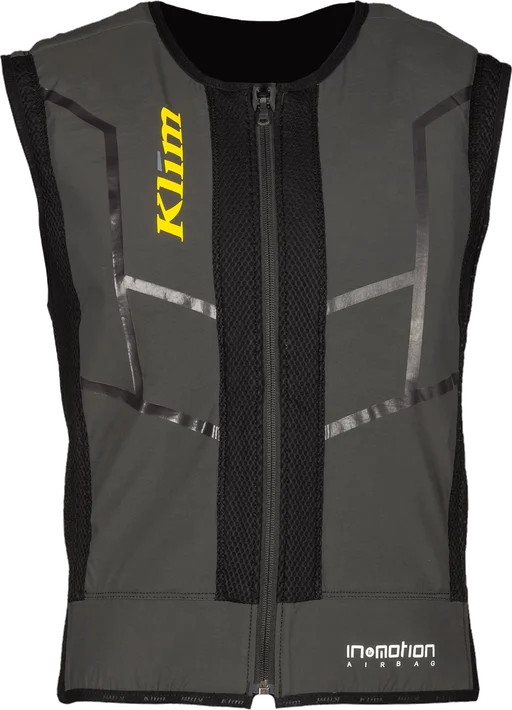
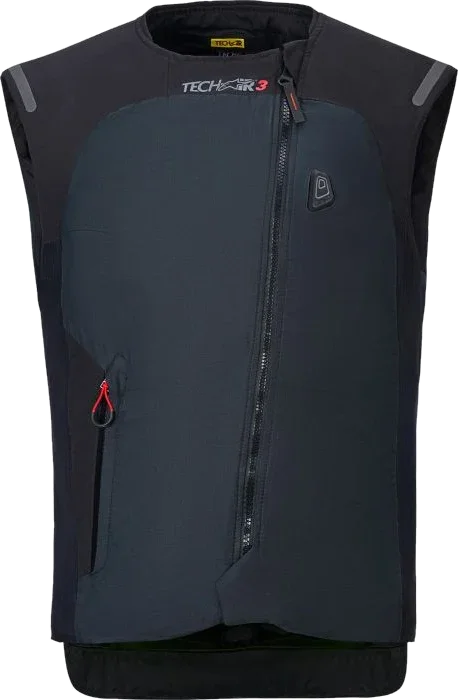
One model per system, chosen by how many stores have it in stock in Canada on 2026-11-10 (7 to 9 each). Lowest in-stock landed price for your region. These are motorcycle airbags; see the mountain biking section above before wearing one on a bike.
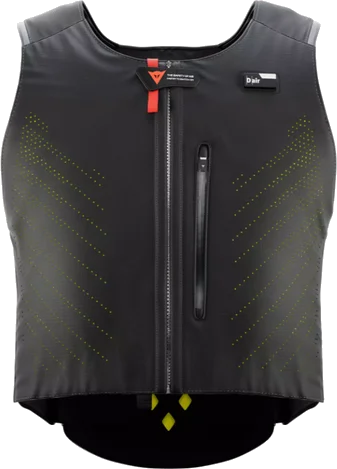
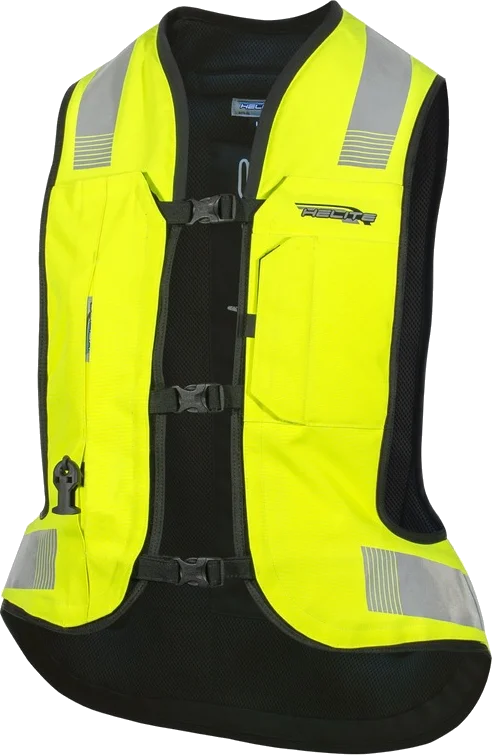
Alpinestars Tech-Air — the autonomous electronic line
- 01Tech-Air 3 (entry, CA$749.95).The entry-tier electronic airbag. 6 sensors, 50 ms deploy time, full upper-body coverage (chest + shoulders + back below the waist), 40-hour battery, 4-hour recharge, Bluetooth LE app for status and ride logging. Worn over or under any jacket. Available in canvas (Tech-Air 3 V2 Canvas), leather (Tech-Air 3 V2 Leather), and standard variants on alpinestars.com. The Tech-Air 3 vest landed at CA$749.95 from Alpinestars Canada on 2026-11-10; the US view was US$759.96 from High Road Motorsports, a Canadian store shipping to the US; Alpinestars US and several US stores list it at US$799.95, still higher than the Canadian price. It is in our catalog; verify the size/color you want before checkout (current stock in our catalog includes open-box inventory).
- 02Tech-Air 5 / Tech-Air 5 Plasma (mid-tier, US$789–829 list in May 2026; not in the ALLR catalog, not re-checked).Worn inside a Tech-Air-compatible jacket OR inside any jacket with at least 4 cm (1.57") of extra circumference at the chest for the vest to expand into. This is the host-jacket sizing trap — see the Tech-Air Compatibility Checker before buying. 20–40 ms deploy time, faster than Tech-Air 3 due to a different inflator. The 2025 Plasma upgrade made the inflator user-replaceable (US$119.95 self-service) rather than requiring factory return.
- 03Tech-Air 7X (road, track and light off-road, CA$1,299.95; US$1,080.02 in the US view).Alpinestars describes it as developed for road racing, track days and performance road riding, with light off-road riding also covered. 4 tri-axial sensor units (1 accelerometer + 1 gyroscope in the ECU plus 2 accelerometers on the shoulders), which Alpinestars markets as 12 sensors by counting each axis separately (4 units × 3 axes = 12 sensor axes). 44 ms maximum inflation time. Manufacturer-claimed 90% force reduction vs passive CE Level 1. Two riding modes: STREET (street and light off-road) and RACE (closed-circuit track). For dedicated motocross/supercross, see the separate Tech-Air MX. Source: Alpinestars' Tech-Air 7X page, read 2026-11-10.
- 04Tech-Air 10 / Tech-Air 10 V2 Race (race flagship, CA$1,436.95; US$1,164.95 in the US view).MotoGP-derived race system. 12 sensors, 40 ms maximum inflation, 95% force reduction vs passive. Covers shoulders + chest + full back + hips. Integrated CE Level 2 back protector built into the vest as the passive backstop. Algorithm trained on MotoGP race data plus 2,000+ lab-simulated crash scenarios. Total weight ~2.3 kg in size medium. Built as a complete race underlayer worn under leathers; less practical for street commuting than Tech-Air 3 or 5.
- 05What's NOT required: a subscription.The persistent rumor is that Alpinestars charges a recurring fee. The reality: Tech-Air has never had a mandatory subscription. The ongoing costs are (a) battery service every several years and (b) inflator refill if the bag deploys (US$119.95 for Tech-Air 5 Plasma, similar for other models). The Tech-Air app is free; data portal access is free. See Bennetts' Tech-Air 3 V2 review for the explicit confirmation.
Dainese D-Air — independent of the bike, activated in the app
- 01Dainese Smart Jacket (entry, Smart LS from CA$820.36).Dainese's long-running airbag vest. 7 sensors processing data at 1,000 Hz. CE-certified chest + back coverage. Auto-arms when the magnetic top button is clasped + motorcycle vibrations are detected above 10 km/h (6 mph). LED indicators: blue = standby (jacket on, not armed), green = armed (jacket sees motorcycle motion). Deployment time is not officially published by Dainese — third-party reviewers estimate roughly comparable to Tech-Air 5 (~30 ms). The Smart Jacket LS is in our catalog; the women's variant and hi-vis variant are also listed. On 2026-11-10 the LS landed at CA$820.36 (US$539.97 in the US view), the hi-vis variant at CA$499.95 (US$398.11) and the women's variant at CA$499.95 (US$425.49).
- 02Dainese Smart Air (new for 2026, US$749 list on Dainese US, 2026-10-05; not in the ALLR catalog).Released February 2026. Independent vest (worn over or under any jacket; no Dainese-jacket pairing required). CE Level 2 chest + back. Dainese describes a triple-activation D-air system: it is designed for up to three airbag deployments, replacing the gas generator after each one (US$139 per generator on Dainese's US page, October 2026), and up to 18 hours of battery, USB-C rechargeable. Dainese's US price was US$749 in October 2026, with a US$599 sale price showing at the time. Activation is done in the app: per Dainese's product page, you download the free D-air app, register the vest and wait for Dainese's confirmation email before first use. The app also manages modes (Road, Offroad, EV), battery and software updates. See Rider Magazine's Smart Air review.
- 03Dainese Mugello / Misano D-Air race suits (Mugello 3 from CA$5,473.99, Misano 3 from CA$3,072.36).Race-suit-integrated D-Air for serious track use. The Mugello 3 D-Air perforated 1-piece (US$3,965.94 in the US view) and the Misano 3 D-Air (US$2,217.44) are full one-piece leathers with the D-Air bladder built into the suit's hump and torso. These are race-tier purchases — not the right starting point for the back-protector gap question.
- 04What's NOT required: any subscription or motorcycle connection.Dainese's official D-Air FAQ says the Smart Jacket is autonomous and needs no connection to the motorcycle, and that Smart Air arms from the vest's own motion sensing (vibration or speed above 10 km/h in Road mode). The D-air app is free to download, and we found no subscription fee on Dainese's Smart Air page. Smart Air does need the app once: first-time activation means registering the vest in the app and waiting for Dainese's confirmation email.
In&Motion / Klim Ai-1 — modular module-plus-vest
- 01How the system works.In&Motion is a French company that licenses its airbag platform to motorcycle apparel brands. The architecture is modular: you buy a vest from one of the licensee brands (Klim Ai-1, Held Air-Vest, Ixon IX-Airbag, RST V&A, Furygan AirBag), and you separately buy or subscribe to the In&Box — a snap-in ECU module containing the sensors, battery, and firing logic that fits into a pocket on the vest. If your vest goes off, you remove the In&Box, replace the inflator cartridge yourself (~US$99 inflator + ~$30 cartridge), and you're back in service. If a new generation of In&Box comes out, you can swap the module without buying a new vest.
- 02The vest (Klim Ai-1, CA$429.95).Klim's Ai-1 Airbag Vest is the dominant US-market In&Motion product (rebranded for the ADV market). CE-certified coverage: full back + chest + collar bones. Vented mesh outer designed for warm-weather riding. Available in standard and Rally configurations. On 2026-11-10 the standard vest landed at CA$429.95 (US$299.99 in the US view) and the Rally at CA$622.74 (US$352.49), before the In&Box module. The Held, Ixon, RST, and Furygan variants use the same In&Motion bladder and same In&Box module under different exterior styling.
- 03The In&Box module (optional ~US$12/mo OR US$399 one-time, May 2026 list prices).This is the persistent misinformation. Some buyer guides claim 'In&Motion requires a $12 monthly subscription forever.' That's been wrong since In&Motion introduced one-time activation. Current options from In&Motion's pricing page: US$12/month subscription, US$120/year subscription, or US$399 one-time activation. The one-time option is genuinely permanent — no fees after that. The subscription tiers include slightly different warranty and VIP support, but for a buyer who wants to own outright the one-time payment is supported.
- 04Refill after deployment (US$99 self-service).If the vest fires, you replace the inflator cartridge yourself by following the post-inflation procedure — no factory return required. Replacement inflator from a retailer is approximately US$99–100. This is the In&Motion architecture's biggest practical advantage over the Dainese and Alpinestars competition for ADV riders: a wilderness deployment doesn't require sending the vest to a service center.
- 05Deploy time + coverage.Approximately 60 ms inflation, slower than Tech-Air's 20–50 ms but faster than Helite's mechanical tether. Coverage is back + chest + collar bones; the vests sized for women and smaller riders sometimes use the same In&Box but a smaller bladder. The In&Motion review at Bennetts covers the deployment and coverage details for the licensee variants.
Helite — the mechanical tether (the dark-horse option)
- 01How it works (no electronics whatsoever).Helite Turtle 2 (CA$841.92 landed on 2026-11-10; US$550.01 in the US view) is built on a 100% mechanical trigger: a coiled lanyard clips to a hard mount on the bike and to a release pin in the vest. If you separate from the bike by ~50–80 cm (depending on lanyard length), the tether stretches taut and physically pulls a firing pin out of a compressed CO₂ cartridge mounted in the vest. The CO₂ rushes into the bladder, inflating it within 80–100 ms. No battery, no firmware, no calibration. The vest sits over your regular motorcycle jacket as a outermost layer.
- 02What it covers (more than you'd expect).Back + chest + collar bones + neck (the original Helite design extends a neck collar that supports the cervical vertebrae after deployment, a coverage zone that no electronic vest matches in 2026). The CE-certified passive back protector built into the vest body provides Level 1 protection even when the airbag hasn't fired.
- 03The trade-offs.Slower deploy time than electronic systems (~80–100 ms vs 20–50 ms). Requires you to actually separate from the bike — a low-side where you slide alongside the bike without ejecting won't trigger. The lanyard is a daily attach/detach ritual at every start and stop. The visual aesthetic is bulkier than electronic vests. The benefits: no electronics to fail, no battery to die at the wrong moment, no firmware to update, no app, no $99 inflator service requirement — a CO₂ cartridge refill cost roughly US$30–40 in May 2026 and you replace it yourself.
- 04E-Turtle 2 — Helite goes electronic.For riders who want Helite's coverage zones (back + chest + neck) but with electronic deployment, the Helite E-Turtle 2 adds an electronic crash-detection module to the same vest design. It landed at CA$1,034.71 (US$682.11 in the US view) on 2026-11-10. Deploy time drops to ~80 ms. The mechanical-tether option remains available on the same vest for redundancy.
- 05Other Helite variants.The Helite GP Air Track is the race-tier mechanical version. The Helite Vented Airbag Jacket and Helite Free-Air Mesh Airbag Jacket integrate the same mechanical airbag bladder into a full riding jacket rather than a vest — useful for riders who don't want to wear two layers in summer. On 2026-11-10 the GP Air Track landed at CA$1,057.60 (US$707.38 in the US view), the Vented jacket at CA$1,034.71 (US$817.15) and the Free-Air Mesh jacket at CA$1,299.99 (US$1,029.00).
Already have a jacket with a back pocket? Upgrade the insert
If your jacket already has a pocket in the back (most do, usually with a foam dummy in it), the cheapest real upgrade is a CE insert. This is not the first thing we would buy, which is why it comes after the vests and airbag vests above. Check your jacket's pocket size first, and see the foam-dummy trap.
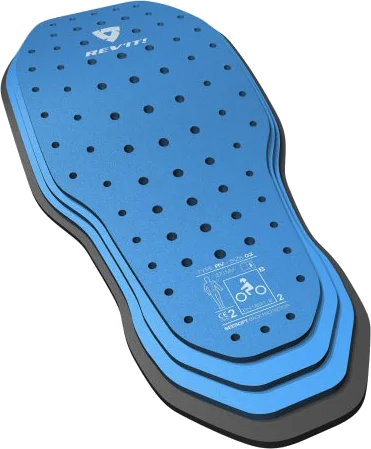
A low-priced Level 2 insert
A Level 2 insert from the lowest price tier, in stock at 10 stores in Canada on 2026-11-10. Lowest in-stock landed price for your region.
Mountain bike protection in the ALLR catalog
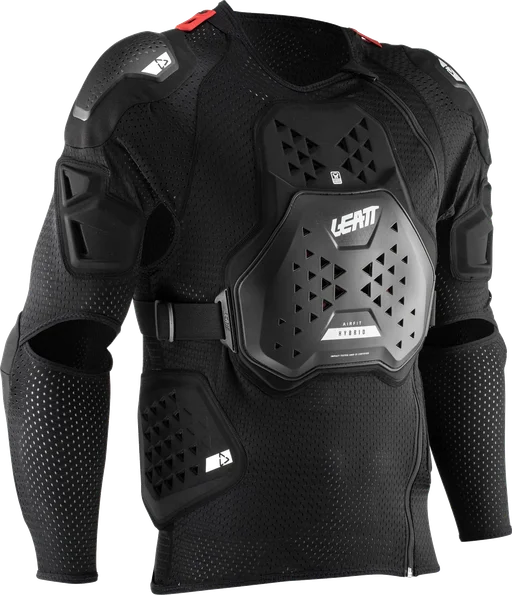
ALLR compares motorcycle gear, so the mountain bike list is short. These four are wearable (no insert to fit) and come from brands that make mountain bike protection. Level 1 or Level 2 is the EN 1621-2 level in ALLR's listing data or the maker's own words; EN 1621-2 is a motorcycle standard, see the section above. The Leatt AirFit Evo vest in the motorcycle block above is the Leatt page quoted in the mountain biking section.
Wearable mountain bike back protection
Chosen for stock (more stores first, within brands that make mountain bike protection) and a mix of vest and body-protector styles. Lowest in-stock landed price for your region.
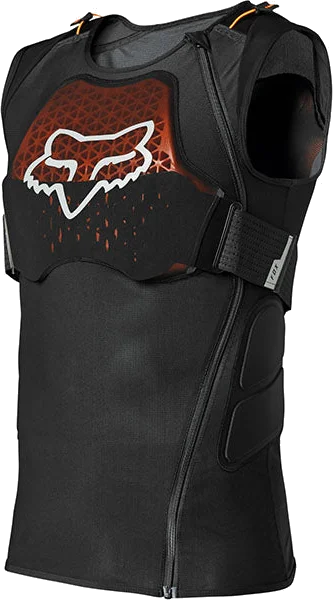
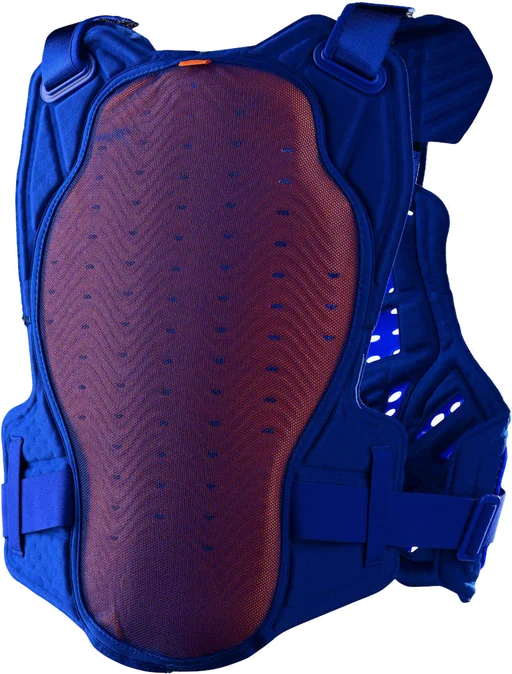
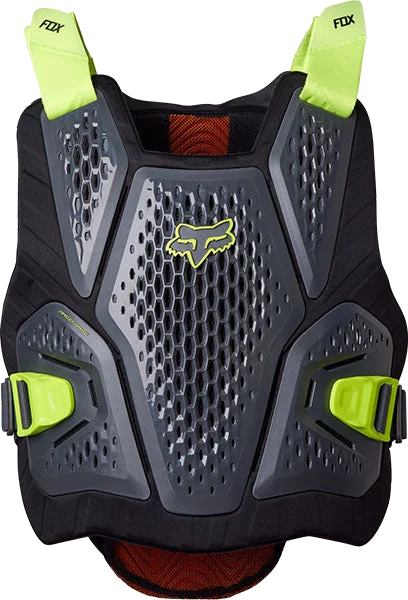
More from the bike-protection brands in our catalog: Leatt, EVS and Troy Lee Designs, or browse all protection gear.
What back protectors and airbag vests cost, by region
Wearable back protectors against airbag vests, typical landed price by region (the middle product, 2026-11-11): Canada CA$280 against CA$828, the US US$182 against US$551, Europe €149 against €466, the UK £141 against £450. The Europe and UK figures include import VAT (re-read on 2026-11-11, after ALLR added VAT to UK and EU landed prices); the Canada and US figures are before sales tax. The picture is the same everywhere: an airbag vest costs several times what a protector vest does.
What a back protector and an airbag vest cost near you
Typical landed price (the middle product), what most products cost, and how many we compared. Back protectors here are wearable vests and strap-on protectors; inserts are not counted.
In Canada, a typical airbag vest costs about 3.0 times a typical back protector vest (CA$828 against CA$280).
In the United States, a typical airbag vest costs about 3.0 times a typical back protector vest (US$551 against US$182).
In Europe, a typical airbag vest costs about 3.1 times a typical back protector vest (€466 against €149).
In the United Kingdom, a typical airbag vest costs about 3.2 times a typical back protector vest (£450 against £141).
Showing your region. Change it with the flag at the top of the page.
How these numbers were made
ALLR catalog via get_product_offers on 2026-11-11. A product counts in a region only if at least 3 stores that ship there have it in stock, and the price is the cheapest of those landed totals (item plus shipping, duty and brokerage; Canada and US prices are before sales tax, UK and Europe prices include import VAT, 20% in the UK and 21% in the EU, except where the destination is VAT-free for that item). Listing variants with identical prices in all four regions count once. Back protectors are wearable vests, body protectors and strap-on harnesses; inserts, kids' and women's-only models and chest-only guards are left out. Airbag vests cover wearable vests, shirts and standalone systems; airbag jackets are left out. Typical is the median; most cost is the middle half of products (25th to 75th percentile). Currencies are not converted. The script that makes these figures is scripts/backprotector-price-ranges.mjs in ALLR's repository.
Cost-per-incident — passive vs airbag math
For a rider trying to decide where to put the next few hundred dollars, the meaningful question is cost per crash you might survive better. The numbers below are the realistic ownership math we use when we make our own recommendations:
| Option | Upfront, lowest landed Canada | Upfront, US view | Refill if it fires once (US$) | Total, US view plus refill (US$) | Coverage zones |
|---|---|---|---|---|---|
| Nucleon Plasma (passive L2) | CA$99.95 | US$74.84 | $0 (foam doesn't deplete) | US$74.84 | Spine only |
| Alpinestars A-1 Pro (chest + back vest, passive) | CA$224.99 | US$155.17 | $0 | US$155.17 | Spine + sternum |
| Helite Turtle 2 (mechanical) | CA$841.92 | US$550.01 | $35 (CO₂ cart.) | US$585.01 | Spine + chest + neck |
| Tech-Air 3 (electronic entry) | CA$749.95 | US$759.96 | $120 (inflator) | US$879.96 + battery service | Spine + chest + shoulders |
| Klim Ai-1 + In&Box one-time | CA$429.95 vest + US$399 module | US$299.99 vest + US$399 module = US$698.99 | $99 (inflator) | US$797.99 | Spine + chest + collar bones |
| Dainese Smart Air (no-sub electronic) | Not in the ALLR catalog | US$749 list on Dainese US, 2026-10-05 | $139 (gas gen.) | US$888.00 | Spine + chest (L2) |
| Tech-Air 10 V2 Race (race tier) | CA$1,436.95 | US$1,164.95 | $120 | US$1,284.95 + battery service | Spine + chest + shoulders + hips |
The takeaway. The first CA$99.95 (a CE Level 2 passive back protector to replace the foam dummy) buys most of the spine-only injury-reduction benefit. The IRCOBI 2023 combined-system analysis is the strongest direct evidence here — passive-only and clothing-only failed to attenuate measured impacts below biomechanical thresholds; airbag-alone and airbag-plus-passive did. Adding an airbag costs several times as much (CA$429.95 to CA$1,436.95 on 2026-11-10) and buys what passive armor can't reach: incremental coverage of chest + collar bones + shoulders + (race only) hips, which passive armor can only address with multiple add-on inserts, plus an additional load-spreading effect on the spine. The right buying sequence is passive first, airbag later — the passive protector also serves as the load-spreading backing for the airbag (the IRCOBI study found that combining an airbag with a passive back protector outperforms either alone), so the passive isn't redundant once you upgrade.
Where to start — the buying sequence
If you've finished the base 5-piece kit (helmet + jacket + boots + gloves + pants) and have budget left to allocate, here's the priority order we'd buy in.
- 01Step 1: replace the jacket's foam dummy (CA$84.95 to CA$99.95 for the Alpinestars inserts).Open your jacket's back-protector pocket; if the insert squishes easily under your thumb without resistance, it's the foam dummy. Buy a CE Level 2 insert sized to your back length (S/M/L/XL): the Nucleon Plasma at CA$99.95 for an Alpinestars jacket, the Forcefield Pro Lite K at CA$89.00 for a more contoured Alpinestars-shaped fit, or the Knox Aegis at CA$239.99 for a non-Alpinestars jacket. Five-minute install (unzip pocket, swap insert, zip closed). This is the highest-return safety upgrade you can make for under CA$100.
- 02Step 2: add chest protection if you ride above city speeds (from CA$224.99).Most jackets ship with no chest insert at all. If you ride highways, twisty roads at pace, or do any trackday, add chest protection: the Alpinestars A-1 Pro chest-and-back vest (CA$224.99) is the lowest-priced option in stock, because the Forcefield Elite chest insert has no in-stock Canadian listing (one US listing, US$49.99). Cheap insurance against a high-side. Skip if you only commute at city speeds.
- 03Step 3: evaluate whether an airbag fits your riding (CA$429.95 to CA$1,436.95).After steps 1–2 you've closed the worst gaps for a fraction of an airbag's cost. An airbag adds chest + collar bones + shoulders + (race) hips coverage plus higher peak-force attenuation on the spine. Worth buying if you ride 5,000+ km/year, do trackdays, ride two-up with a passenger, or commute on highways at sustained 100+ km/h speeds. Less compelling for low-mileage city riders.
- 04Step 4: pick the airbag system by use case, not brand.Sport-touring / commuter → Tech-Air 3 or Tech-Air 5 / 5 Plasma (electronic, fastest deploy, app integration). Want an electronic vest with no subscription and no bike connection → Dainese Smart Air (electronic; the free D-air app is used for first-time activation). Adventure / dual-sport → Klim Ai-1 + In&Box one-time activation (modular, self-service refill, no factory return). Touring / cruiser / want zero electronics → Helite Turtle 2 (mechanical tether, about US$35 CO₂ refill in May 2026). Race / trackday → Tech-Air 10 V2 (race-derived, integrated L2 back).
- 05Step 5: keep the passive back protector installed under the airbag.The IRCOBI 2023 study found that combining an airbag with a passive back protector outperforms either alone for both flat and penetrant impact configurations. Don't remove the Step-1 passive insert when you add the airbag — the passive becomes the second layer of defense and absorbs energy the airbag misses. Some race-tier vests (Tech-Air 10 V2) integrate a CE Level 2 passive back as part of the design; for jacket-pocket-fitted vests like Tech-Air 5, keep your jacket's insert installed underneath.
Common questions
Is a back protector or an airbag vest better for mountain biking?
Can I wear a motorcycle airbag vest for mountain biking?
Which standard should a mountain bike back protector have?
What is the difference between EN 1621-2 and EN 1621-4?
How much does an MTB back protector cost compared with an airbag vest?
Does my jacket already have a back protector?
Does the Alpinestars Tech-Air require a subscription?
Does the Dainese D-Air Smart Jacket require a subscription?
Does the Klim Ai-1 / In&Motion vest require a subscription?
Can I wear the Tech-Air 5 with any jacket?
Are airbag vests CE-rated?
Will the airbag fire by accident if I drop the bike at a stoplight?
Do I need a back protector AND an airbag, or is the airbag enough?
Limits of the numbers in this guide
Airbag systems have generational successors more often than passive armour (Tech-Air 5 to 5 Plasma in 2025, Tech-Air 10 to 10 V2 in 2024, Dainese Smart Air new for 2026), so the product links and catalog prices were checked on 2026-11-10 but may need re-checking if a model line is replaced. The In&Motion / Klim Ai-1 subscription pricing is the most-misunderstood number in the category and changes often. The cost-per-incident table assumes one deployment in a five-year ownership window; if you never crash, the upfront cost is the only cost, and passive armour's lifetime advantage widens. Browse the protection catalog for live landed prices; the method is on the methodology page. For the full buying sequence, start at the buyer's guide hub.
Reading the labels on the rest of the kit: AAA vs AA vs A: EN 17092 and CE armour levels explained covers the garment classes and shows how Level 1 and Level 2 armour are priced across ALLR's catalog.
For a suit comparison, including armour and airbag compatibility, see RST Tractech Evo D3O vs Rev'It Argon 3.
Sources
- SATRA: EN 1621 motorcyclist protectorsStandard · 2026-11-10Back protector pass limits: mean transmitted force below 18 kN, no single value over 24 kN (Level 1); inflatable protectors are covered by EN 1621-4
- iTeh Standards: EN 1621-2:2014 back protectorsStandard
- IRCOBI 2023: coupling a wearable airbag with a back protectorOnly the airbag alone or with a back protector attenuated impact below injury thresholds in the measured configurations
- Giustini et al., Int J Epidemiol 20142,319-subject cross-sectional study of airbag use and spinal injury (page blocked automated fetching)
- Alpinestars: Tech-Air autonomous airbag systems
- Dainese: airbag FAQ
- Standards Ireland: EN 1621-4:2013 catalogue entryStandard · 2026-11-10Scope: mechanically activated inflatable protectors for motorcycle riders; published 16 January 2013
- Leatt: Back Protector Vest 3DF AirFit Evo2026-11-10Premium Level 2 back protection (EN1621-2) with added chest coverage
- Leatt: Back Protector for hydration bags, CE Level 22026-11-10Insert for Moto and MTB hydration systems; standard not named on the page
- POC: Spine VPD 2.0 Vest (MTB protection)2026-11-10Meets the EN 1621-2 Level 1 protection standard
- EVS Sports: F1 Pro Chest Protector2026-11-10Back protection CE EN 1621-2 Level 1; listed for moto, eMTB and MTB
- Troy Lee Designs: Rockfight CE Chest Protector2026-11-10Back insert exceeds CE EN1621 Level 1
- Helite: bicycle airbag FAQ2026-11-10B'Safe vest is for urban cyclists and not adapted for mountain bike
- Dainese: how a motorcycle airbag works2026-11-10Road mode arms above 10 km/h, Offroad mode above 20 km/h
- Dainese: Smart Air vest2026-11-10Lists PPE 2016/425 and a Level 2-certified D-air airbag system
- Alpinestars: Tech-Air 7X system2026-11-10Developed for road racing, track days and performance road riding; light off-road
Watch the price of what’s in this guide
We’ll email you when the landed price drops (shipping, duty and brokerage included for your region; import VAT included in the UK and EU, before sales tax in Canada and the US). Free account, one tap.